


- Uforce has raised $700M in a Series A round at a $6B valuation.
- Valor Equity Partners and the UK National Wealth Fund co-led the round.
- The funds will scale drone production in Ukraine and allied countries.
Uforce, a defence technology company founded in Ukraine and headquartered in London, has raised $700 million in a Series A round at a $6 billion valuation. It builds uncrewed boats, aircraft and ground vehicles, plus the software that controls them. Bloomberg reported that the valuation makes it the UK’s most valuable defence startup.
The round was co-led by Valor Equity Partners and the UK National Wealth Fund (NWF). Bloomberg reported that the NWF put in $150 million, its largest defence investment. The US-Ukraine Reconstruction Investment Fund (URIF) also took part. Menlo Ventures, Xantium and Hiro Capital joined, and existing investors Shield Capital, Ballistic Ventures, Lakestar and Squadra increased their stakes.
It follows a $50 million seed round at a valuation of more than $1 billion in March 2026, led by Lakestar and Shield Capital.
From Ukrainian drone makers to a defence technology group
Uforce is led by CEO Oleg Rogynskyy, a Ukrainian-born serial entrepreneur who previously founded sales software company People.ai. Its chairman is former Ukrainian Prime Minister Oleksii Honcharuk, and former UK Defence Secretary Ben Wallace sits on the board. Bloomberg reported in March that the group combines nine Ukrainian defence companies.
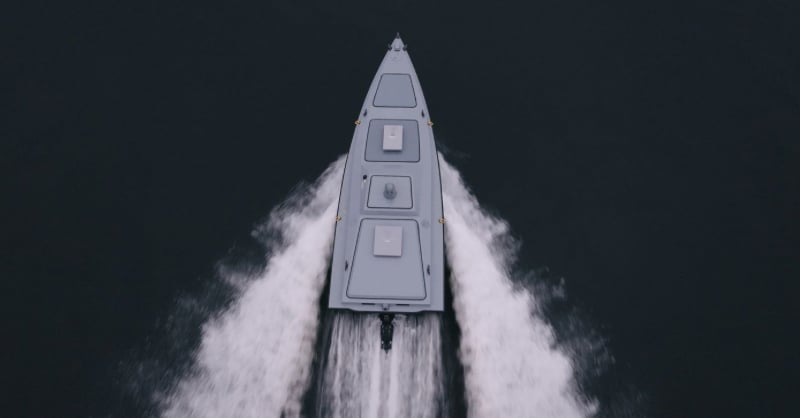
Its products include the MAGURA family of uncrewed surface vessels, the NEMESIS strike aircraft, the LIUT ground robots and the PREDATOR counter-drone turrets. The company says MAGURA vessels have contributed to the destruction of more than a dozen Russian warships in the Black Sea, and that NEMESIS drones have completed more than 300,000 combat flights across more than 100 units. Those figures are company claims.
Rogynskyy told CNBC that bookings have more than doubled over the past year, from a base of several hundred million dollars. He declined to give exact figures or name customers beyond saying Uforce already works with several NATO countries.
The company says its goal is to make defence a hundred times cheaper than offensive operations. “This investment will help us scale production for Ukraine and bring to allies solutions they can field, integrate and sustain at the speed of modern combat,” Rogynskyy said.
The money will expand production in Ukraine, the US, Europe, Asia-Pacific and the Middle East, building platforms close to where they are needed. URIF’s investment will support operations in Ukraine, including staffing and research. Uforce recently announced a partnership with ReconCraft to scale US manufacturing of MAGURA vessels, and it is a founding member of the EU-Ukraine Drone Alliance.
UK wealth fund makes its biggest defence investment
The NWF is wholly owned by HM Treasury, based in Leeds and has £43.2 billion of finance to deploy. In May 2026, it made its first defence investment, $34 million in a British engineering business, Reuters reported.
“Through the National Wealth Fund’s support, UFORCE is expanding the production, engineering and application of its combat-tested autonomous systems, with British and Ukrainian teams working side by side. Together, we will create high-skilled jobs, strengthen supply chains and build a long-term partnership,” said Oliver Holbourn, chief executive of the NWF.
Retired US Army General Christopher Cavoli, former NATO Supreme Allied Commander Europe and a partner at Valor Equity Partners, will join Uforce’s board. “UFORCE turns that hard-won frontline experience into both unmanned systems and the operational know-how to use them effectively,” he said.
Conor Coleman, head of investments at the US International Development Finance Corporation, said the deal is URIF’s largest investment in the emerging technology sector to date and “a significant step toward mobilising investment that strengthens Ukraine’s economic fortitude.”
European drone makers compete for defence contracts
Uforce enters a crowded European market where startups are scaling autonomous aircraft, naval systems and counter-drone technologies.
Munich-based Helsing confirmed a $1.8 billion Series E at an $18 billion valuation in July 2026, led by Dragoneer and Lightspeed. Berlin-based Stark, which builds autonomous strike drones and loitering munitions, raised €500 million at a valuation above €3.5 billion in June 2026 from investors including Sequoia and Founders Fund. Germany’s Quantum Systems raised $1.2 billion in a Series D in July 2026 at a valuation of about $8 billion.
These companies overlap with Uforce in autonomous defence and unmanned systems, although their product portfolios and operating models differ. Uforce’s combination of Ukrainian battlefield experience, multiple unmanned platforms and international manufacturing ambitions gives it a broader position across air, sea and counter-drone capabilities.
A growing market for military drones
The investment reflects a wider expansion in defence procurement. Grand View Research estimates that the global military drone market was valued at $47.4 billion in 2025 and could reach $98.2 billion by 2033, growing at a compound annual rate of 8.9%. The market includes a broad range of military drone platforms, rather than only low-cost autonomous systems.
The Russia-Ukraine war has accelerated demand for affordable drones, autonomous navigation and counter-drone systems. However, the sector also faces questions around high private valuations, procurement cycles and the limited number of government buyers.
For Uforce, the next challenge is turning its funding and battlefield-linked sales into scalable manufacturing and long-term defence contracts. Can a company valued at eight times its March price deliver that fast enough to justify it?



