- Novartis has agreed to acquire London biotech Myricx Bio for up to $1.5 billion, known for a new type of cancer drug payload.
- Since 2019, Myricx raised $121 million before being acquired, giving early investors roughly a nine-to-one return.
- This deal highlights NMT inhibitors as a possible answer to drug resistance in the $14.5 billion ADC market, which could grow to $32.1 billion by 2033.
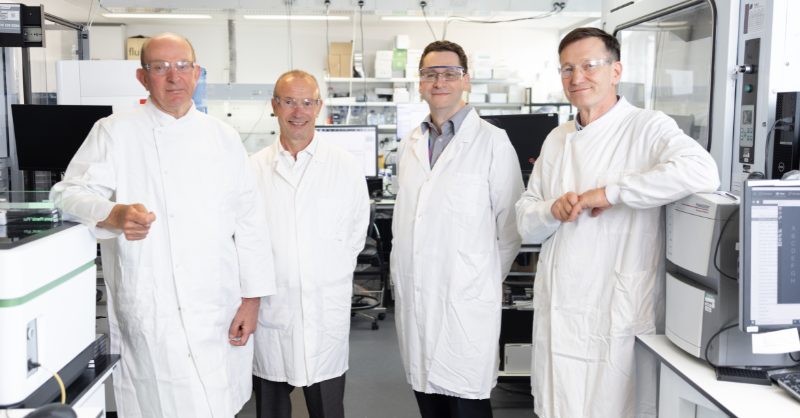
Six years ago, three academics started a cancer research project at Imperial College London and the Francis Crick Institute. Today, their idea led to one of the UK’s biggest biotech exits of the year, even though Myricx remained largely under the radar until Novartis stepped in.
Myricx Bio, based in London with a team in the US, has agreed to be bought by Novartis for up to $1.5 billion. The deal includes $1.1 billion paid upfront and up to $400 million in milestone payments. Novartis expects to finish the transaction in the second half of 2026, pending regulatory approval.
A new payload aims to overcome resistance
Myricx was founded in 2019 by Ed Tate, Roberto Solari, and Andrew Bell. The company develops antibody-drug conjugates, also known as ADCs, that use a targeting antibody and a toxic payload to kill tumour cells while leaving healthy tissue unharmed.
What sets Myricx apart is its payload, an N-myristoyltransferase inhibitor, short for NMTi, which the company believes can work in tumours that resist current payloads like TOPO-1 inhibitors. Its two main programs target the B7-H3 and HER2 proteins found on solid tumours.
“There is a widely recognised and critical unmet need for new ADC payloads that can improve the standard of care over current payloads, overcome payload resistance, improve tolerability and offer a wider therapeutic index. We are delighted that Novartis recognises the transformative promise of our NMTi-ADC platform,” says Mohit Rawat, Myricx’s chief executive officer.
Drug resistance is a major challenge in the ADC market, which is expected to be worth $14.5 billion in 2025 and could grow to $32.1 billion by 2033 at an 11.5% annual growth rate. Making payloads last longer remains a technical hurdle, so major drug companies often buy solutions rather than develop them in-house.
For example, Pfizer bought Seagen for $43 billion, and AbbVie bought ImmunoGen for $10.1 billion, both looking to solve the same problem as Myricx.
Tech Funding News has previously covered the race for next-generation ADC payloads. In 2025, Germany’s Tubulis raised a record €308 million in a Series C round to develop its payload platform.
At the same time, Myricx’s competitors, such as ADC Therapeutics, Mersana Therapeutics, and Araris Biotech, are each working on their own linker or payload chemistries to address resistance and toxicity.
Nine years, $121 million, and one acquisition
Myricx is notable for reaching this milestone with relatively little funding. The company raised $121 million in two rounds: a $6.56 million seed round in 2019 from Sofinnova Partners and Brandon Capital, and a $114 million Series A in mid-2024, co-led by Novo Holdings and Abingworth, with support from British Patient Capital, Cancer Research Horizons, and Eli Lilly.
Even without big funding rounds or high-profile valuations, these modest investments led to an exit with about a nine-to-one return.
British Patient Capital, part of the British Business Bank, backed the Series A round before Novartis got involved. It’s unusual for UK state-linked venture capital to be part of a billion-dollar biotech exit. This also fits a broader trend TFN has noticed: in the first half of 2026, deep tech and life sciences quietly grew their share of the UK’s $17 billion in funding, even as AI gets most of the spotlight.
“This proposed acquisition reflects our strategy to scale innovative platforms, as we have with radioligand therapies, to deliver more durable, transformative treatments for patients,” adds Fiona Marshall, president of biomedical research at Novartis.
What happens next
Novartis holds the scientific hypothesis that NMT inhibition can be effective where TOPO-1 and tubulin payloads fall short. If Myricx’s platform proves itself in clinical trials, this $121 million-to-$1.5 billion story could become the template other under-the-radar payload biotechs will chase.
If not, a nine-to-one return on paper means nothing until a drug clears trials.