


- LO:TECH has raised $12M in a Series A round led by MMC to expand its 24/7 market-making business in the US and Asia.
- The founders went with LO:TECH after losing their jobs at a trading firm when FTX collapsed.
- LO:TECH’s revenue has tripled since August 2025, despite the team still being under 20 people.
When FTX imploded in 2022, the trading firm Marcus Horsley worked at left its digital assets. Horsley and his future co-founder were out of work, so instead of looking for new jobs, they set up their own company.
LO:TECH, a London-based high-frequency trading and market-making firm, has raised $12 million in a Series A led by MMC, with Faction, 13 Books Capital, and a new investor, Atka, also joining.
Building a 24/7 market maker
Horsley, LO:TECH’s CTO and co-founder, has a PhD in maths from nine years ago and spent time in quantitative research and systematic trading. He met his co-founder at one of those firms. After the firm they were at exited digital assets following FTX, they saw a new opportunity.
“We enjoyed working together. We knew we could build good technology. We enjoyed working together. We knew we could build good technology,” Horsley tells Tech Funding News.
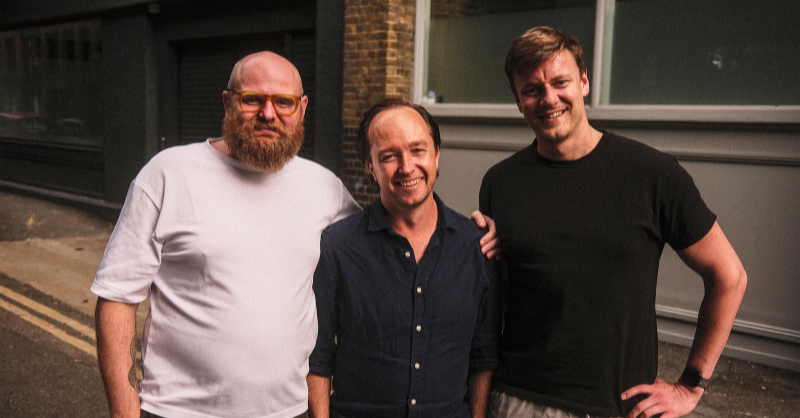
LO:TECH was founded by Tim Meggs, Horsley and Alex Williams. Horsley describes it as a high-frequency trading firm that does tens of thousands of trades a second, providing liquidity for the very fast trades.
“If you want to sell your house it takes ages. If you want to sell your Apple shares it’s very quick in fact as we market makers are in the book providing liquidity all the time,” he says.
The bulk of LO:TECH’s business is proprietary trading with its own capital. The systems developed for that purpose now also support two further services: reselling market data and providing trading technology to clients looking for liquidity in new venues or new tokens.
“A marketplace is only as good as the trades,” says Horsley. With designated market making in place, LO:TECH now has three product lines and is launching execution services in traditional, digital, and prediction markets as part of this announcement.
Meggs positions it as a generational disconnect: “Capital markets were built for a world that opened at 8am and closed at 4.30pm. That’s not the way risk is traded anymore. The best trading firms in the world are very tech-enabled, but they grew up on the old market infrastructure. We built ours from the ground up for a world that’s 24/7 onchain and across all asset classes.”
Strong growth underpins this funding round. Since its $5M seed round in August 2025, revenue has tripled, and the team has doubled. The company has two years of triple-digit revenue growth and now works with over 50 clients, including public companies.
LO:TECH has also got into the prediction markets. Their news page has a Kalshi data distributor licence from July 2026. That’s a significant credential, given that Kalshi is on the cusp of a $40B valuation after a $1B investment from Sequoia and Wellington.
Tokenised assets pull a crypto-born firm back to traditional exchanges
LO:TECH put their timing down to a shift in the crypto market. The total crypto market cap dropped by around half over the year to June 2026, while the value of tokenised real-world assets on public blockchains more than doubled, from $20.6 billion to $38 billion. Tokenised equities also went from $960 million in March to $3.2 billion by the end of September.
Institutions are all following the same trend. In June, Intercontinental Exchange and OKX announced a joint venture that will let OKX customers access tokenised NYSE equities. A Citi Institute report forecasts the tokenised asset market will hit $5.5 trillion by 2030.
Horsley outlines LO:TECH’s next steps: moving from digital assets onto traditional exchanges.
“The big story has been trading real-world assets on-chain. For us, the next step is to focus more on traditional markets, trading equities, FX, and commodities on traditional exchanges. Our technology allows us to trade on those as easily as we do on some of the more exotic DeFi pools. We’ve already got a lot of our traditional products traded on the digital rails, so it makes perfect sense to trade them on the traditional rails as well,” he says to TFN.
A small team, a six-month closing process, and tough competition
The funding will allow LO:TECH to expand into New York and Singapore. Horsley gives two reasons: teams in different time zones improve coverage and risk management for 24/7 markets, and the sheer number of institutions and token launches in the US and Asia means you need local business development and sales teams, as clients’ needs in that region differ.
MMC’s Oliver Richards says their investment thesis is very much based on that trend: “Tim, Marcus and the LO:TECH team have built a business designed for markets that never close, delivering triple-digit revenue growth over the past year through exceptionally tough crypto market conditions. As more trading moves to always-on venues, we see a significant opportunity for LO:TECH to provide the infrastructure those markets need, and we’re delighted to support the team on that journey.”
Team growth will be gradual. LO:TECH currently has just under 20 people, and Horsley expects to add no more than 10 to 15 over the next few years.
Regulation is still an open question. LO:TECH intends to obtain regulatory approval in every market it enters and is currently looking at US licences even as it launches its execution services. So licensing comes after the product launch.



